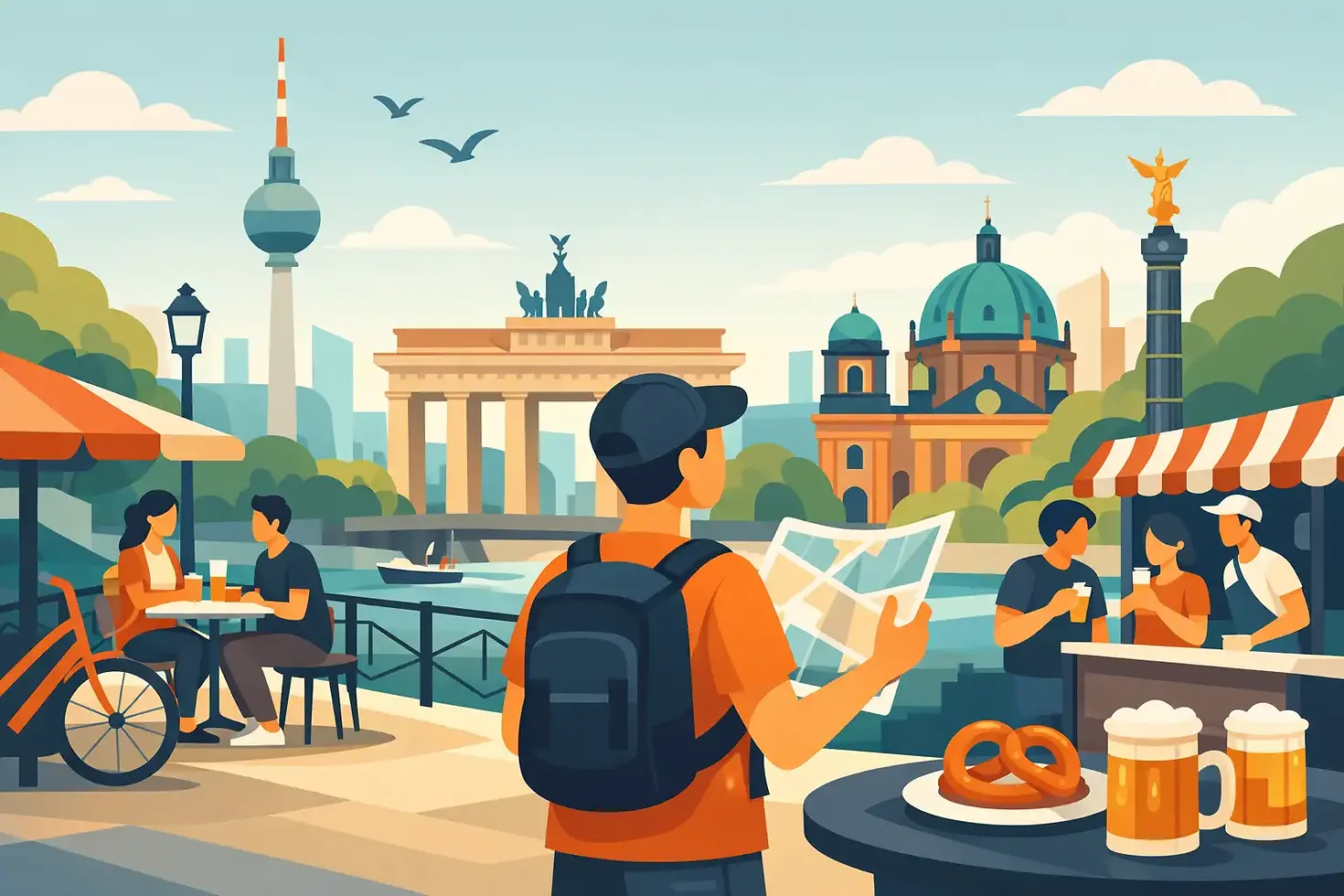
How to Explore Berlin Like a Local
- aviblum100
- May 22
- 6 min read
Berlin tells on you fast. Spend your first day bouncing between Checkpoint Charlie, a chain coffee shop, and a crowded souvenir stand, and you’ll get the glossy version of the city. Useful? Maybe. Memorable? Not really. If you want to know how to explore Berlin like a local, you need a different approach - one built around neighborhoods, timing, transit, and the kind of places Berliners actually return to.
The good news is that Berlin is one of the easiest major cities to do this in. It’s spread out, yes, but it rewards independent travelers who move with a bit of intention. You do not need to cram in every landmark. You need a smarter filter.
How to explore Berlin like a local starts with neighborhoods
Locals don’t experience Berlin as one big sightseeing checklist. They experience it in pockets. Kreuzberg feels different from Charlottenburg. Neukolln moves differently than Prenzlauer Berg. Mitte may hold many of the headline sights, but it is not the whole city, and treating it that way is how people end up thinking Berlin is all queues and overpriced brunch.
If you have limited time, pick two neighborhoods per day and stay loyal to them. Walk properly. Stop when something catches your eye. Sit for a coffee without watching the clock. Berlin is not a city that reveals itself well from the back seat of a hop-on bus.
Kreuzberg is a strong start if you want edge, food, canal walks, and a sense of everyday Berlin mixing with nightlife energy. Prenzlauer Berg works well if you like leafy streets, cafes, boutiques, and a cleaner, calmer pace. Neukolln is better for travelers who want a little grit, excellent food, and bars that feel current instead of staged for visitors. Charlottenburg suits anyone who wants a more polished side of the city, with classic architecture, strong shopping, and a West Berlin feel that many first-time visitors miss.
The trade-off is simple. The more neighborhoods you try to cover in one day, the less local your trip will feel. You’ll see more pins on a map and understand less of the city.
Stop chasing only the headline sights
Yes, some major sights are worth your time. The Reichstag area, Museum Island, the Brandenburg Gate, and the East Side Gallery all matter for obvious reasons. Berlin’s history is not background decoration. It shapes the city block by block.
But locals don’t build entire days around standing in lines for things they can walk past in ten minutes. A better move is to pair one major sight with the surrounding neighborhood. See the memorials and government district, then continue into a normal lunch spot and a long walk through nearby streets or Tiergarten. Visit Museum Island, then cross into Hackescher Markt only briefly before heading farther out, where the city feels less polished and more real.
This matters because Berlin can feel strangely underwhelming if you only do the famous spots. The city’s character lives in the in-between spaces - canal paths, late-night kebab counters, wine bars tucked onto side streets, green squares full of people talking for hours, and old apartment districts where every block gives you a different mood.
Use public transit the way Berliners do
If you really want to explore Berlin like a local, stop thinking of transit as a backup plan. In Berlin, trains, trams, buses, and the U-Bahn are part of the rhythm of the city. They are often the fastest way to move, and they free you from wasting money on cabs or getting trapped in tourist zones.
The system looks intimidating for about fifteen minutes. After that, it clicks. You do not need to memorize everything. You need to know where you’re starting, where you’re headed, and whether walking the last ten minutes is better than making one extra connection.
Locals also don’t over-transfer. If a route has three changes just to save four minutes, it is usually not worth it. Berlin is a walking city once you arrive in the right area. Use transit to get into a neighborhood, then explore on foot.
One more thing: factor in distance honestly. Berlin is bigger than many visitors expect. Pairing a morning in Charlottenburg with an afternoon in Treptow and late drinks in far north Prenzlauer Berg can look fine on a map and feel exhausting in real life.
Eat where the city actually eats
Berlin has plenty of food that gets hyped online for the wrong reasons. There are famous places that are genuinely good, and there are famous places that survive on photo traffic and reputation from 2017. The local move is not always chasing the single most viral spot. It’s understanding what kind of meal fits the neighborhood and the moment.
A great Berlin day often includes one easy meal, one planned meal, and one spontaneous stop. Maybe that means a doner or falafel when you’re out walking, a booked dinner in the evening, and a bakery or cafe stop somewhere in between. Trying to make every meal a major event usually backfires.
Also, Berliners are practical eaters. They go where quality is solid, prices are fair, and the vibe does not feel forced. That could be Turkish food in Kreuzberg, modern wine bars in Neukolln, excellent Vietnamese spots in the East, or old-school German dining in the West. It depends on your style, but the principle holds: choose neighborhoods with strong food culture, then make decisions from the ground instead of from generic “best of Berlin” lists.
If there’s a line made mostly of tourists at noon and an equally busy place around the corner full of locals speaking German, that’s your clue.
Learn Berlin’s timing and you’ll avoid half the bad experiences
A lot of tourist disappointment is really a timing problem. The same market, museum area, or canal can feel chaotic at one hour and great at another. Berlin rewards early starts in some areas and late starts in others.
Popular streets are better in the morning before the crowds pile in. Parks and canals are best when people actually have time to linger. Dinner in Berlin often starts later than many US travelers expect, and nightlife starts much later. Show up too early to a bar district and it can feel dead. Show up too late to a brunch favorite and your wait time becomes the whole story.
Sunday is another thing visitors need to plan around. Much of Berlin shuts down more than people expect. That is not a flaw. It is part of the local rhythm. Markets, walks, lakes, cafes, and slow neighborhood time make more sense on Sundays than heavy shopping plans.
The same goes for season. Winter Berlin can be brilliant if you lean into markets, bars, museums, and cozy food. It is less fun if your entire plan depends on outdoor lingering. Summer gives you long evenings, lakes, beer gardens, and packed parks, but also bigger crowds and slower service in the busiest areas. Neither is better in every way.
Walk with curiosity, not a checklist
The travelers who enjoy Berlin most usually leave room for drift. Not aimless wandering all day, but enough flexibility to follow what the city is offering. A strong route with space for detours works better than a rigid hour-by-hour itinerary.
That might mean ducking into a courtyard, stopping at a neighborhood bookstore, sitting by the Landwehr Canal longer than planned, or shifting dinner because a street suddenly feels worth exploring. Berlin has texture. If you schedule every minute, you miss it.
This is where expert-curated self-guided planning beats both random internet research and traditional group tours. You want enough structure to avoid wasting time, but enough freedom to respond to the city in real time. That’s the sweet spot.
What locals skip - and you probably should too
Not every “must-see” is a must-do. Berlin has attractions that are historically significant but poorly experienced in peak hours. It has nightlife recommendations that sound legendary but feel like theme parks once they hit enough travel lists. And it has restaurant neighborhoods where prices rise faster than quality.
A local mindset means being selective. If a place is famous, ask why. Is it truly excellent, historically important, or just easy to market? Sometimes the answer is yes and it’s worth going. Sometimes the better choice is two streets away.
That applies to shopping too. Big retail corridors are fine if you need them, but Berlin gets more interesting in independent boutiques, design stores, record shops, and flea markets tied to specific neighborhoods. The point is not to avoid everything popular. It is to stop confusing popularity with quality.
The smartest way to explore Berlin like a local
Think in routes, not random recommendations. Build your day around a neighborhood, one anchor sight, a few trusted food and drink options, and enough margin to follow your curiosity. That is how locals actually use the city. They do not spend all day zigzagging between disconnected attractions because a ranking list told them to.
If you want Berlin to feel less confusing and more rewarding, give yourself better filters. Choose areas with character. Use transit well. Eat with common sense. Respect the city’s timing. Let the trip breathe.
Berlin does not ask you to see everything. It rewards you for seeing the right things, in the right order, with your eyes open.